Goal met: Thanks to your support, we hit our $25K end-of-year fundraising goal!

Blog Post • February 21, 2025
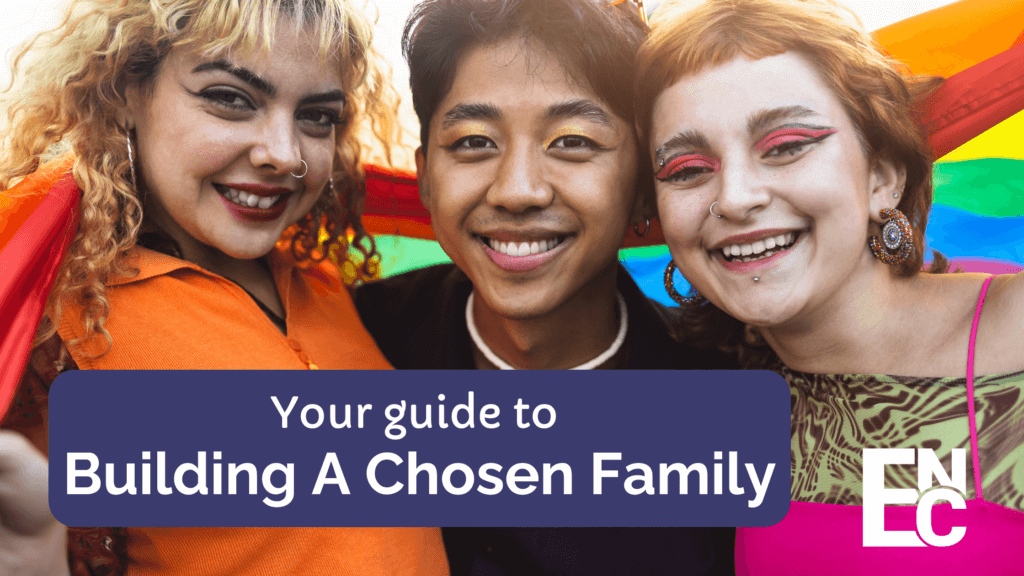
Growing up, I often heard the sentiment, "You only get one family; you should be grateful for them." This saying may ring quite true for those fortunate to have the blessing of a supportive family, but I learned as I got older that my definition of family would be more expansive than what I learned in my youth. I grew up going to aunties, cousins, and uncles with whom I shared no relation but were family. And in my culture, it was so commonplace I never had to question it. Only as I began to grapple with my gender and sexuality did I start to take under deeper consideration what family meant to me and who I would be able to consider family. Family could be friends who provide unwavering support, a mentor who guides you through life's challenges, or a partner who shares your dreams and aspirations.
There is no singular 'right' way to have or cultivate your chosen family. Below, you'll find essential tips supporting creating and sustaining your chosen family and information about the importance of familial connections. Our heart goes out to those navigating rejection or tensions from biological families.
Chosen family, also known as 'found family,' are the connections you make outside of biological (and potentially legal) ties to complement or supplement biological family. In other words, they may not be the family you are born with, but they are the ones you choose to be in a relationship with. For many within our community, the fear of rejection from biological family members may create a heavy divide between who they know themselves to be and how their biological family looks at them. This divide comes with health and well-being ramifications, contributing to higher rates of homelessness and poverty, financial insecurity, and death by suicide. Research shows that having supportive people in the community of LGBTQ+ people reduces isolation and mental health issues. Chosen families provide a sense of belonging and identity, helping individuals feel seen, understood, and accepted for who they are.
The chosen family is deeply connected to our survival in the Black community, specifically in America. During times of American chattel slavery, familial ties were consistently severed or frayed by nature of the dehumanization of enslaved people, and people would often lose connections with their biological family through force and external power exerted by white supremacy. It is through the bonds of chosen family that Black people have been able to continue through unimaginable and harrowing times. This unity of people allowed Black people to survive not only American chattel slavery but also Reconstruction, Black Codes, Jim Crow, and general legalized discrimination. Today, chosen family is yet another lifeline for Black queer and trans people, serving as a space where they are free to be themselves when they do not receive the same acceptance or understanding from their biological families. Chosen family is more profound than nature versus nurture: it’s about operating from a liberatory practice in every facet of daily life, even when you may not know the full path ahead.
Here are some tips for getting started with building a chosen family.
Developing and sustaining your chosen family is not always easy. Families have their hardships, and chosen families are often more vulnerable. You have to decide to work through them the same way you chose to be in a relationship. Here are some challenges you may encounter in your efforts and how to overcome them.
Gratitude and commitment are the glue that holds chosen families together. Expressing gratitude shows your chosen family members that their presence and support matter deeply. It says, 'You matter to me,' and makes them feel valued and appreciated. Too often, we thank our community and family as we mourn their loss. We not only deserve but also need to celebrate those we develop such deep connections with regularly and often. This gratitude is a powerful force that strengthens family bonds and makes everyone feel cherished.
Commitment is about showing up regardless of what you're carrying in or the motivation you believe is propelling you. It's about recognizing that being a family means you're not just showing up for the easy times; you're also there for the loss and pain that will come in life. Be the family member you've needed and wanted in your life. Become their listening ear or their conversation partner, their confidant. Learn how to support them and what their best interests are. Please continue to do the work of building and making space for them in your life. And don't forget to take care of yourself. As an individual, you will continue to be a work in progress in any relationship you hold. Remember to invest in what makes you unique or brings you joy.
Gratitude and commitment create a cycle of mutual care and respect. These values remind everyone involved that chosen families are intentional communities of love and support—and that this bond is worth nurturing daily.
One of the most profound aspects of recognizing alternative family structures, such as chosen family, is the potential for personal growth. It allows us to redefine our inner circle, identify those who stand by us, and recognize our community. This understanding underscores the fact that we have the potential to form deeply impactful relationships throughout our lives. These bonds, so strong that they feel like they've always been there, can significantly contribute to our personal growth, offering us hope for the future and a sense of optimism. Whether you're using your time to build your family or looking for ways to celebrate and cherish your time with them, we hope you know you are worthy of love, care, and respect.


Looking for info on Equality NC's 2026 endorsement process?
Visit the Equality NC PAC website for more information and updates.